Case Study: Designing the Acute Oncology Service of the Future with Airedale NHS Foundation Trust
The Challenge: An Acute Oncology Service under growing pressure
Acute Oncology Services (AOS) are facing unprecedented strain. Rising patient volumes, workforce shortages and increasing treatment complexity are stretching services beyond sustainable limits, often at the expense of patient experience and clinical efficiency.
At Airedale NHS Foundation Trust, patients starting Systemic Anti-Cancer Therapy (SACT) have access to a 24-hour AOS telephone line for symptom reporting and advice. While clinically safe, the operational model surrounding the service presented challenges. The AOS team primarily managed calls out of hours, with treatment nurses responding during the day alongside their existing clinical workload. Under significant time pressure and without dedicated acute oncology triage capacity, in-hours calls often resulted in precautionary requests for patients to attend in person for assessment by an AOS nurse. This reactive model, combined with limited tools to support proactive symptom monitoring, created avoidable pressure on both staff and patients and reduced opportunities to intervene early in a patient’s deterioration.
High volumes of unnecessary face-to-face (F2F) assessments for low-risk (green and amber) symptoms
Lack of visibility of patient health status in between appointments and limited ability to track symptom trends, limiting proactive care and ability to predict deterioration or support self-management
Fragmented triage processes, split across teams and working hours
Ward congestion and long waits, delaying treatment and worsening patient experience
Limited ability to track symptom trends, predict deterioration or support self-management
As a result, nearly half of patients with amber symptoms were being brought into hospital, despite UKONS (United Kingdom Oncology Nursing Society) guidance recommending remote monitoring and advice. Patients reported long waiting times, while clinicians faced increasing workload pressures and reduced capacity for acute cases.
The challenge was clear: How could Airedale deliver safer, more efficient acute oncology care without increasing staff or compromising patient experience?
The Solution: A digitally enabled AOS model with Careology
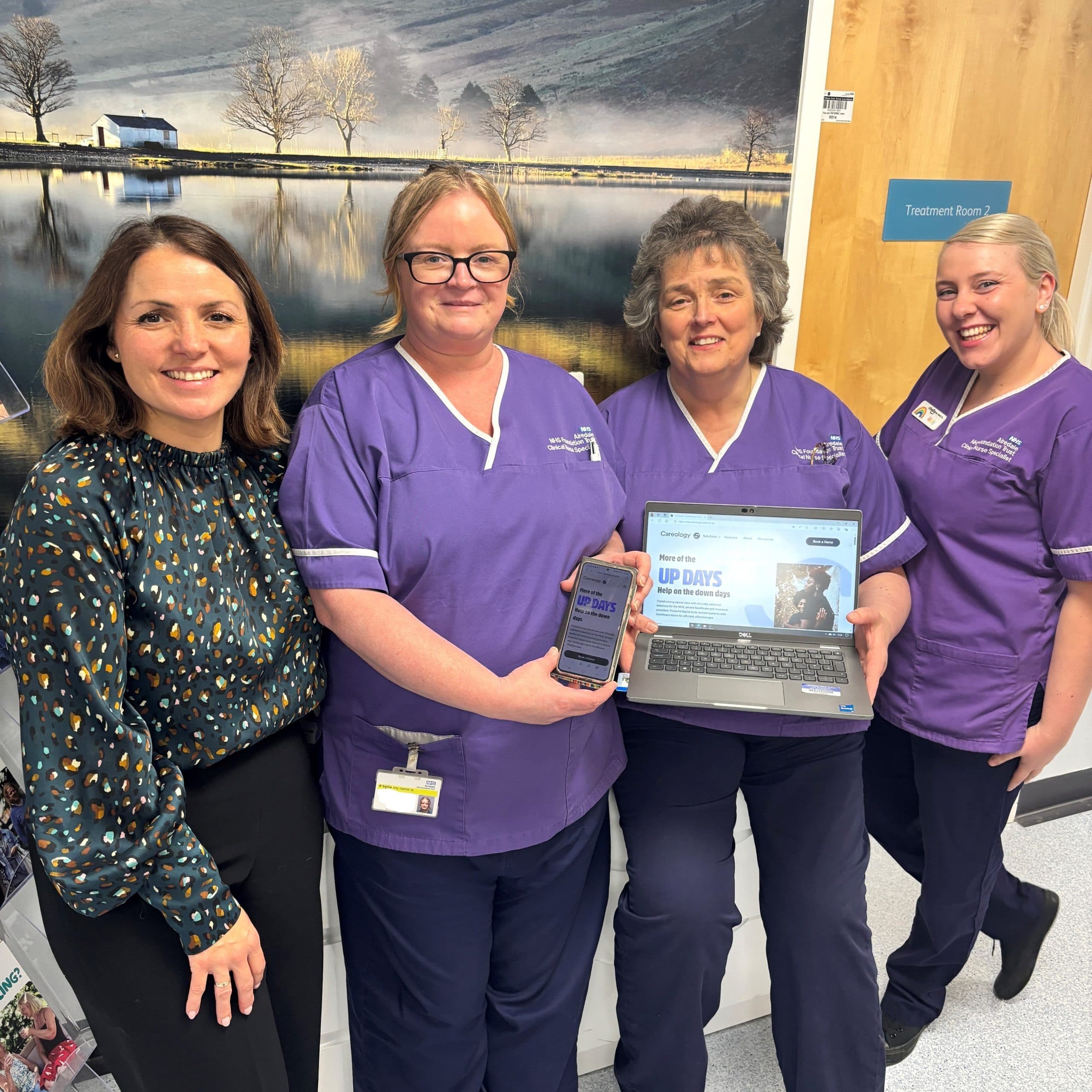
To address these challenges, Airedale introduced Careology, a digital cancer care platform, embedded directly into the existing AOS pathway.
Careology was introduced at the SACT consent clinic, enabling patients to:
Record symptoms using UKONS triage
Prepare for their first treatment with local guidance from their Airedale Team
Track mood, wellbeing and health metrics
Access trusted self-care guidance and education
Receive medication and appointment reminders
At the same time, clinical teams gained access to the Careology Professional dashboard, providing:
Real-time visibility of patient symptoms
Automated notifications for red-flag deterioration
Clear dashboards to prioritise care
Action logs to document follow-up and triage decisions
This blended model preserved the safety of traditional AOS while adding a proactive, data-driven digital layer, transforming AOS from reactive to preventative.
The Impact: Fewer hospital visits, earlier intervention and better experiences.
1. Smarter symptom triage & reduced hospital attendances
Following implementation:
Face-to-face reviews for amber symptoms fell from 45.7% to 11.1%, aligning with UKONS guidance
Outcomes matched performance seen in large, high-performing NHS centres
Red-flag symptoms were managed more efficiently, with:
40% seen appropriately in HODU
30% safely managed via telephone
Zero patients sent to ED
This shift released chemotherapy capacity, reduced congestion, and improved patient flow, without compromising safety.
2. Significant efficiency and cost savings
Between February and July 2025 alone, Careology delivered:
45% reduction in face-to-face assessments
30 hours of clinician time saved
All achieved without additional staffing.
3. Better patient experience and confidence
Patients consistently reported feeling:
More informed
More in control
Better able to communicate symptoms accurately
Key results:
83% would recommend Careology to friends or family
67% actively used educational content to support self-management
“At a time where all control is taken away from you, Careology gives you some control back.”
— Patient, Airedale NHS FT
Careology became a “one-stop shop” for patients, bringing symptoms, education, medications and appointments into a single, trusted space.
4. Empowered clinicians and proactive care
Clinicians reported clear operational benefits:
Improved visibility of patient wellbeing between appointments
Faster identification of deterioration through automated alerts
More proactive care, including early outreach before hotline calls
Streamlined workflows and reduced manual checks
Nurses described the dashboard as:
“Very straightforward”
“User-friendly”
“Much better than daily manual monitoring”
Careology enabled teams to focus time on the patients who need it most.
Why It Matters: A blueprint for sustainable acute oncology care
This blended digital–traditional AOS model demonstrates how trusts can:
Reduce unnecessary hospital attendances
Protect specialist capacity for acute patients
Improve patient experience and confidence
Deliver measurable cost and efficiency gains
Strengthen safety through proactive monitoring
Crucially, it achieves this while preserving patient to clinician contact ensuring clinical time is spent where it adds the most value.
The Big Picture: Designing the AOS of the future
By combining compassionate clinical care with intelligent digital tools, Airedale has shown what’s possible: A more proactive, efficient and patient-centred Acute Oncology Service, built for the realities of modern cancer care.
Scaling this model across the Cancer Alliance could multiply the benefits, freeing capacity, improving outcomes and creating a sustainable future for acute oncology services across the NHS.